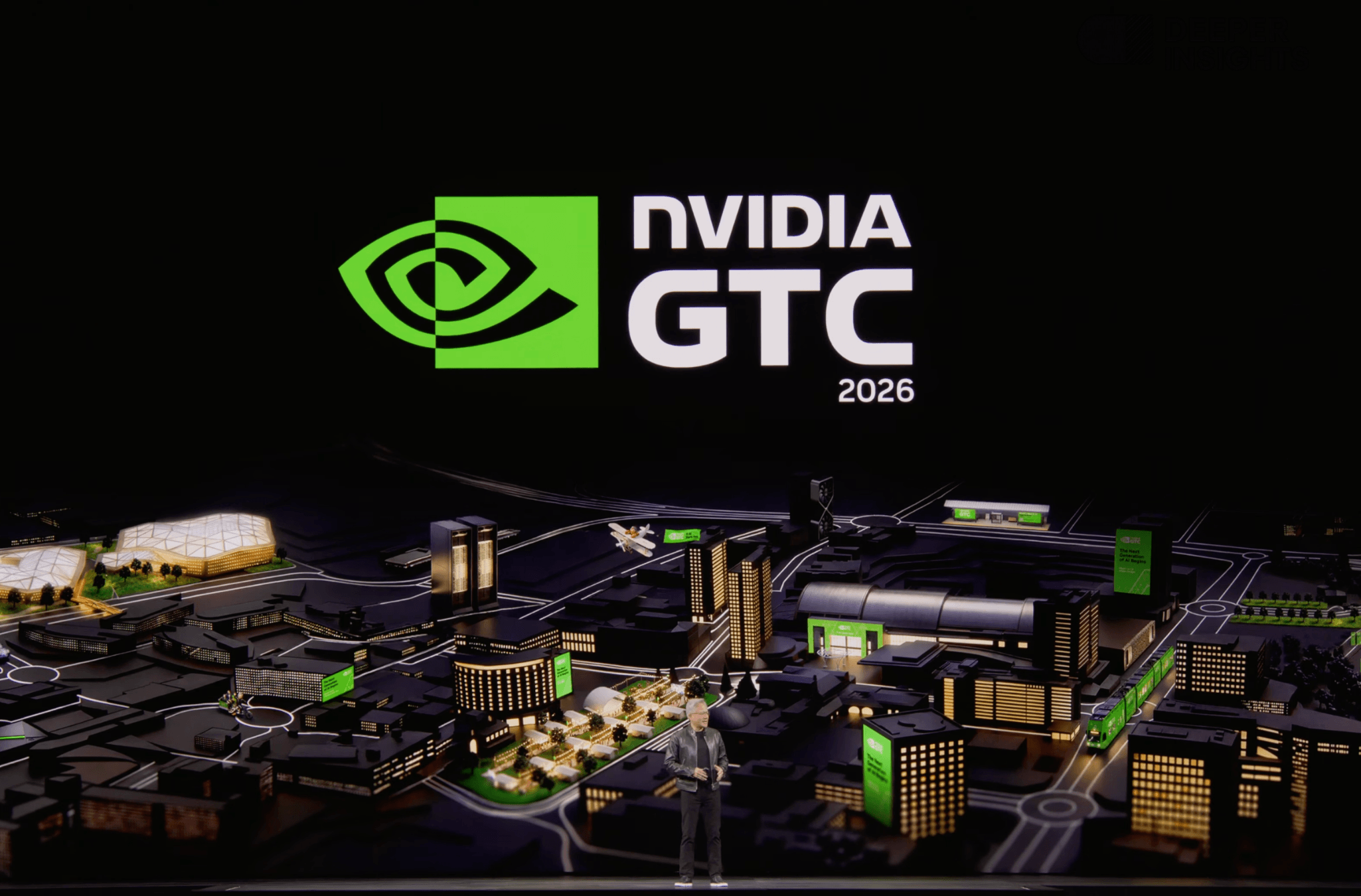
At GTC this year, one of the most meaningful connections we made was with a Taiwan-based hardware partner whose product line aligns closely with Maxta’s direction. Following our initial conversations, both sides reached a preliminary intention to collaborate, with promising potential to explore broader ecosystem value together.
What made this exchange especially meaningful, however, was not only the possibility of partnership itself. More importantly, it further reinforced something we strongly believe: having GPUs does not mean having AI.
As AI adoption continues to accelerate, much of the market conversation still centers around compute — GPU supply, hardware performance, and model scale. These are important foundations, but they do not automatically translate into real AI capability for enterprises. In practice, many organizations discover that acquiring hardware is only the beginning. The more difficult challenge is turning that hardware into an AI system that can actually support real business scenarios.
This is where the real gap in AI infrastructure begins to appear.
The future of AI infrastructure will not be defined only by who has access to compute. It will increasingly depend on who can connect hardware, models, and real-world deployment requirements through system-level capability. Without that layer, even strong hardware resources can remain fragmented, difficult to deploy, and limited in practical value.
For Maxta, this is exactly the role of MaxtaOS.
MaxtaOS is not just a system platform. It is the critical layer that connects compute resources, models, and deployment environments into a unified framework. It helps customers manage complexity across different infrastructure conditions and transforms AI deployment needs into solutions that are practical, repeatable, and scalable.
In other words, the value of AI infrastructure is no longer determined simply by owning hardware. It is determined by whether that infrastructure can support real implementation, continuous operation, and broader adoption across enterprise environments.
That is why conversations with the right hardware partners matter. The future of enterprise AI will not be built by isolated products alone, but by closer collaboration across hardware, software, and deployment ecosystems. When these pieces are aligned, organizations are far more likely to move from experimentation to actual implementation.
As enterprise AI continues to evolve, Maxta looks forward to deepening these conversations, exploring complementary strengths, and creating more practical value across the ecosystem.
Because in the end, the goal is not just to deliver compute.
The goal is to help more organizations truly become Enterprise AI Ready.